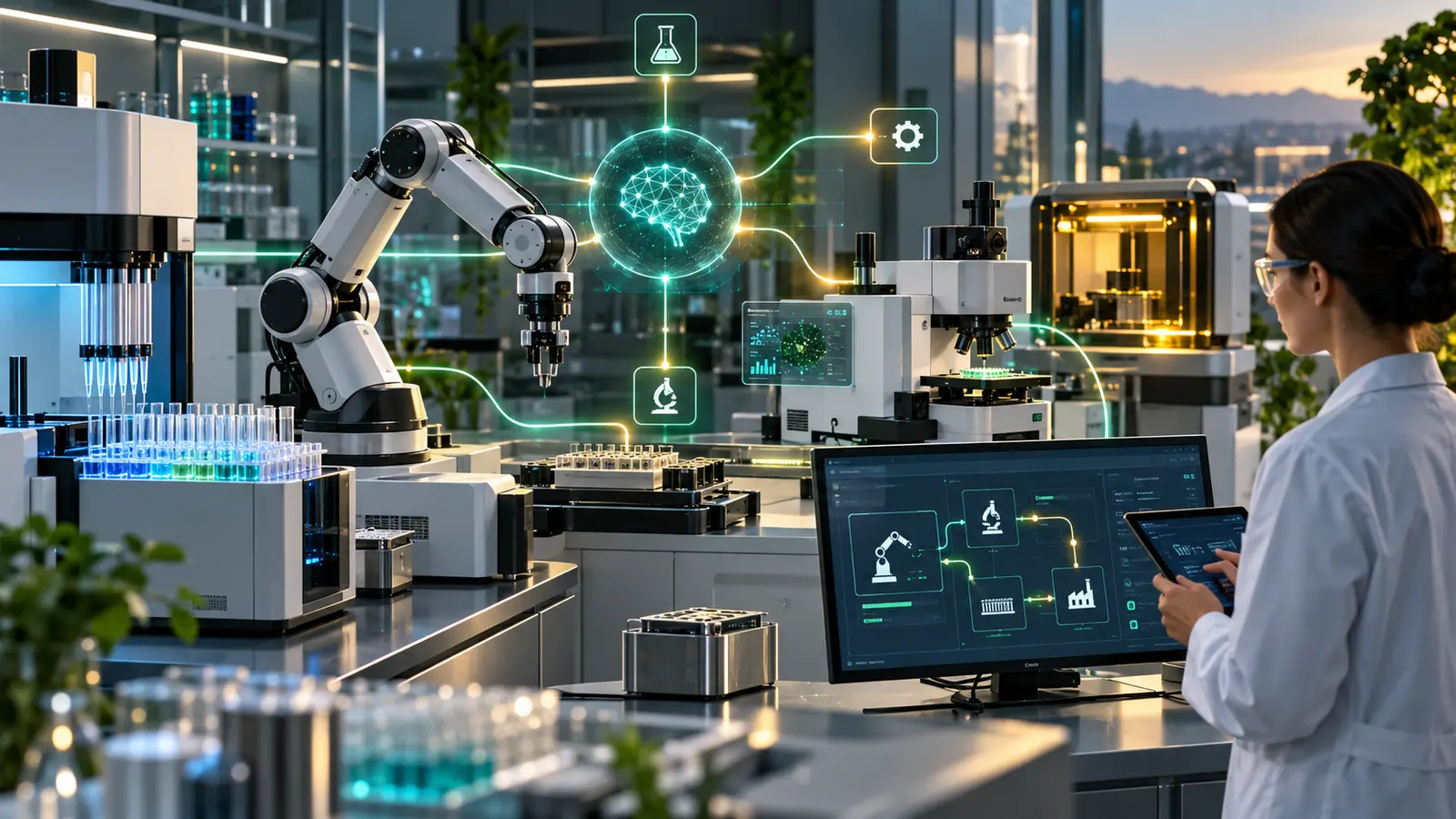
The model-independent specification aims to connect AI agents with programmable laboratory and manufacturing equipment through MCP, command-line tools and APIs.
What you need to know
- MHS is model-independent and supports MCP, CLI and API access
- Early device classes include microscopes, liquid handlers, robotic arms and quantum hardware
- The preview is not a finished commercial product and still requires human supervision
Why a common hardware interface matters
Physical equipment often needs a bespoke integration for every device and workflow. MHS aims to expose device capabilities through a consistent control layer so an agent can discover and operate approved functions without months of custom connector work.
The preview already shows the hard part
Anthropic describes an early Genentech workflow coordinating a liquid handler, robotic arm and plate reader. The model improved the sequence but still struggled with physical intuition, including bubbles, and needed human guidance. Software fluency does not equal laboratory judgement.
How teams should evaluate it
Start with simulated or low-risk equipment, explicit command allowlists, deterministic stop conditions and a human approval boundary. Record every instruction, device state, exception and recovery before considering autonomous physical operation.
HUBAI VIEWA common interface could reduce integration work, but physical intuition, deterministic safety controls and human supervision remain the real deployment test.
Buyer decision signal: Research preview · physical agents
What to verify next
1Confirm preview eligibility and supported devices
2Define command and physical-safety boundaries
3Use simulation before live equipment
4Log device state and recovery behaviour
5Keep human approval for consequential actions
Read the evidence
Capabilities, availability and prices can change. HubAI keeps analysis separate from the underlying official material.
01Anthropic: Model Hardware Standard research previewOpen source ↗ Products
 Products
 Products
 Products