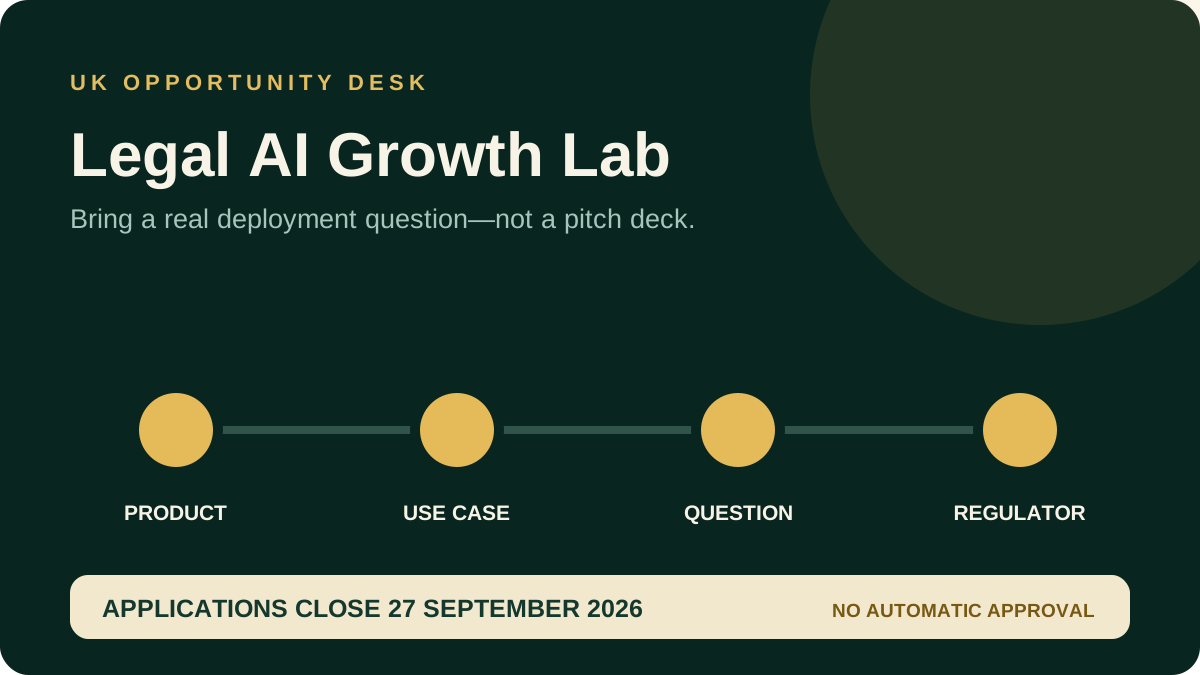
LawTech companies, firms, AI developers, public bodies and other legal-service innovators can apply to work with UK regulators on concrete deployment questions.
What you need to know
- Applications close at 11:59pm on 27 September 2026
- LawTech, firms, AI developers, SMEs and public bodies may fit
- Participation is not regulatory approval or exemption
What the programme offers
Selected participants can work with legal-services and data regulators for up to nine months on defined deployment questions. The value is coordinated guidance across regulatory boundaries, not a marketing endorsement.
Where the strongest use cases sit
AI-assisted conveyancing, legal-document analysis, access-to-justice services and products crossing several regulatory regimes are natural candidates when the applicant can describe a real-world deployment and a specific unresolved question.
What a credible application needs
Explain the product, intended users, real operational use, evidence already gathered and the precise issue that blocks responsible deployment. A generic request for legal advice is weaker than a bounded test with outcomes the regulators can examine.
HUBAI VIEWThe programme is a supervised route to clarify regulatory questions—not approval, endorsement or exemption from legal duties.
Buyer decision signal: Open programme · legal AI
What to verify next
1Confirm applicant and use-case eligibility
2Define the unresolved regulatory question
3Describe real-world deployment evidence
4Name the regulators or regimes involved
5Submit before the published deadline
Read the evidence
Capabilities, availability and prices can change. HubAI keeps analysis separate from the underlying official material.
01UK Government: Legal Services Advisory AI Growth LabOpen source ↗ Business
 Business
 Business
 Business