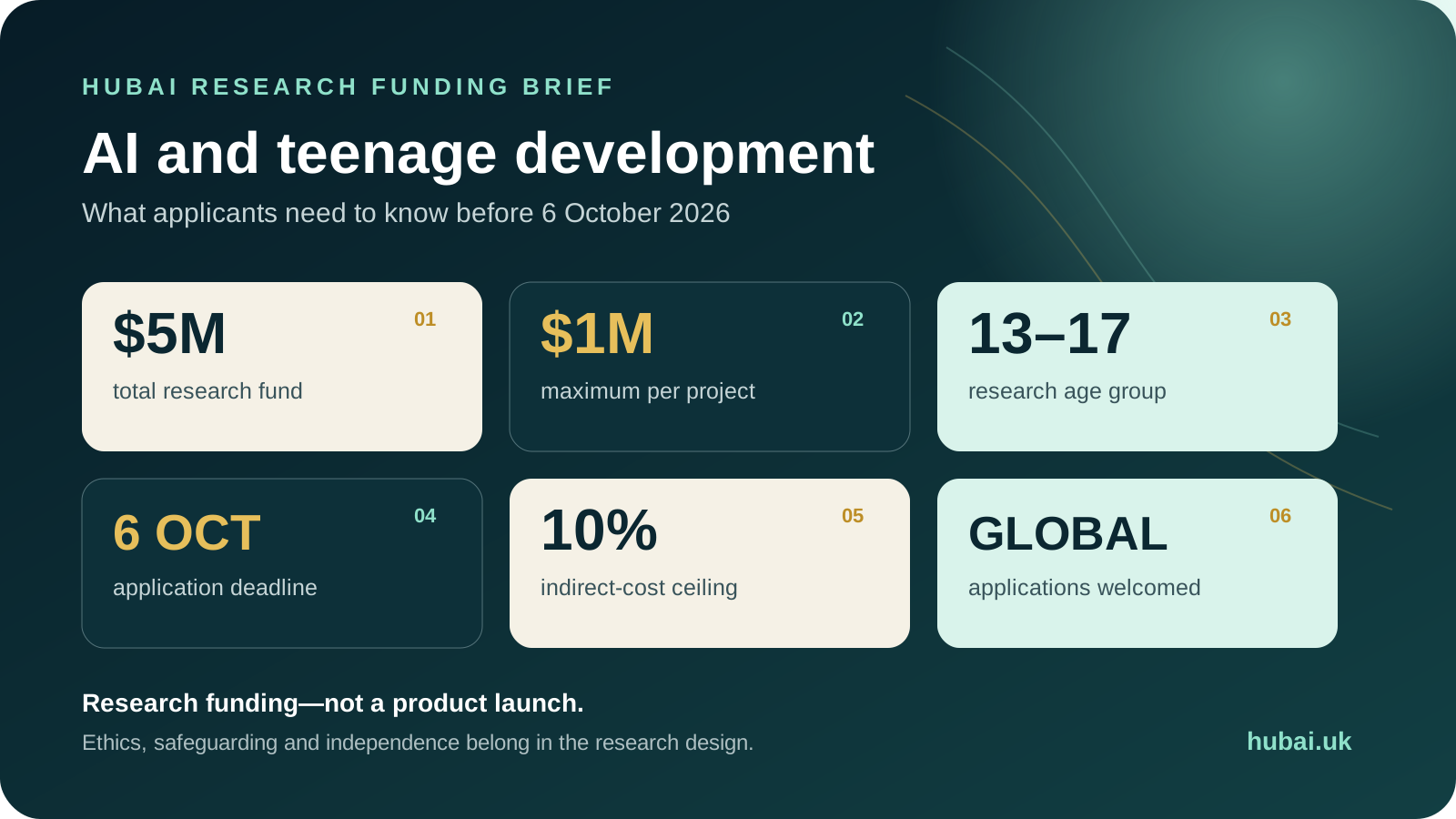
OpenAI is committing $5 million to independent research on how generative AI affects people aged 13 to 17, with individual awards of up to $1 million.
RELATED DECISION GUIDEExplore verified AI research and business fundingWorkflow · evidence · risk · governance →CONTINUE THE DECISIONRead the PISA 2025 AI and learning evidence briefingEvidence · workflow · next action →CONTINUE THE DECISIONBuild a governed AI stack for an education teamEvidence · workflow · next action →CONTINUE THE DECISIONCompare AI tools for academic researchEvidence · workflow · next action →What you need to know
- OpenAI Group PBC has committed $5 million, with individual awards of up to $1 million
- Applications are open worldwide through 6 October 2026; applicants must be 18 or over and show institutional affiliation or substantial relevant experience
- Research involving minors must address ethics review, consent and assent, privacy, safeguarding and responses to disclosures of harm
The funding opportunity at a glance
What the programme is designed to fund
OpenAI announced the programme on 8 September 2026 to support independent research into the effects of generative AI on young people aged 13 to 17. Priority areas include emotional wellbeing and identity, friendships and family relationships, differences across age and culture, AI literacy, age-appropriate product design, and technical or educational interventions that could reduce harm. Qualitative, quantitative, experimental, observational, theoretical, participatory and mixed methods are all eligible.
Who can apply—and when
Applicants must be at least 18 and either affiliated with a research institution or organisation, or able to demonstrate substantial relevant experience. Proposals are welcomed from any country and must be submitted in English, although the research itself can take place in another language. Applications close on 6 October 2026, with selected proposals expected to be notified on or before 13 November. For-profit initiatives are not currently prioritised, so this should not be framed as startup or product-development funding.
Research involving minors carries a higher evidence burden
A project involving teenagers must explain its ethics-review arrangements, informed consent and age-appropriate assent, privacy and data-protection controls, safeguarding procedures, handling of sensitive behavioural or mental-health information, and how the team will respond to disclosures of harm or imminent risk. Relevant child-development or clinical expertise and parental-consent arrangements should be explicit where appropriate.
Independence and disclosure cannot be an afterthought
The grants are funded and administered by OpenAI Group PBC rather than the OpenAI Foundation, and OpenAI says preference may be given to research involving ChatGPT. Funded teams must provide a final report to OpenAI. Public or peer-reviewed publication is encouraged but is not a condition of funding. Applicants should therefore state how methods, conflicts, analysis and publication decisions will remain credible whether findings are favourable, neutral or critical.
What a decision-ready application should show
A strong application needs a precise research question, a defensible sample and method, measurable outcomes, a realistic budget, named safeguarding ownership and a plan for communicating limitations. The programme permits grants of up to $1 million and caps indirect costs at 10% of the award. Treat the budget, ethics plan and independence safeguards as part of the research design—not paperwork to complete after the hypothesis is written.
HUBAI VIEWThe strongest proposals will make independence, safeguarding and publication part of the research design—not administrative footnotes.
Buyer decision signal: Open grant · 6 October deadline
What to verify next
1Define a specific developmental outcome and explain why the chosen method can measure it
2Document ethics review, consent, assent, data protection and safeguarding before recruitment
3Disclose funding, product studied and relevant financial or professional conflicts
4Keep indirect costs within the 10% cap and connect each cost to a research deliverable
5Plan a transparent final report and, where feasible, public or peer-reviewed publication
Read the evidence
Capabilities, availability and prices can change. HubAI keeps analysis separate from the underlying official material.
01OpenAI: Teen development research grants — programme and application requirementsOpen source ↗ Research
 Media AI
 Creator AI
 Research